Ceramic sculpture · 2025
Accordion-Playing Rooster
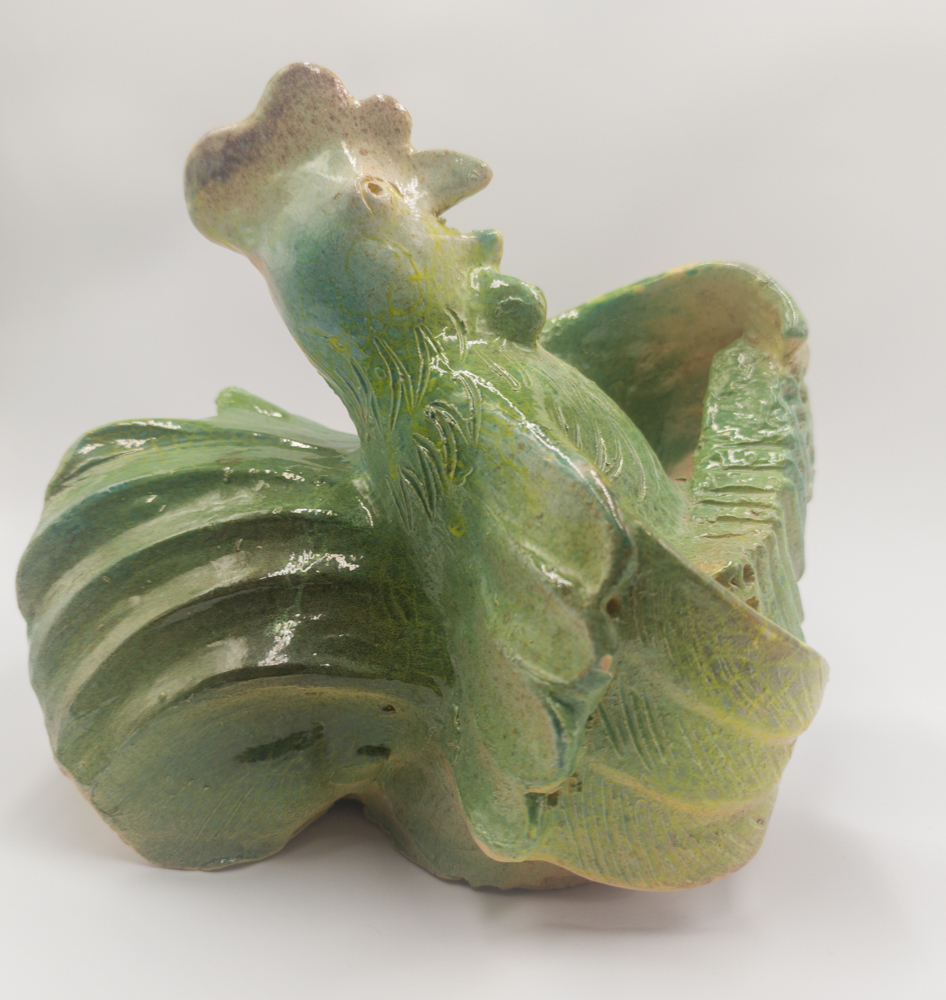
Accordion-Playing Rooster is a glazed ceramic sculpture created by Slava Romanenko in 2025 for an exhibition inspired by the Ukrainian children’s song “Two Little Roosters.” At the centre of the composition is a proud rooster holding a bayan, as though performing a folk melody.
| Artist | Slava Romanenko |
| Year | 2025 |
| Materials | Fired clay, glaze |
| Dimensions | 23 × 20 × 22 cm height × width × depth |
Folk inspiration and a musical character
About the work
The sculpture was conceived as part of an exhibition series inspired by the Ukrainian song “Two Little Roosters.” Slava modelled a rooster, a hen and several chicks, combining a familiar folk subject with his own approach to shape and character. The rooster became the central and largest figure in the group. At the time, it was also the largest ceramic work Slava had made.
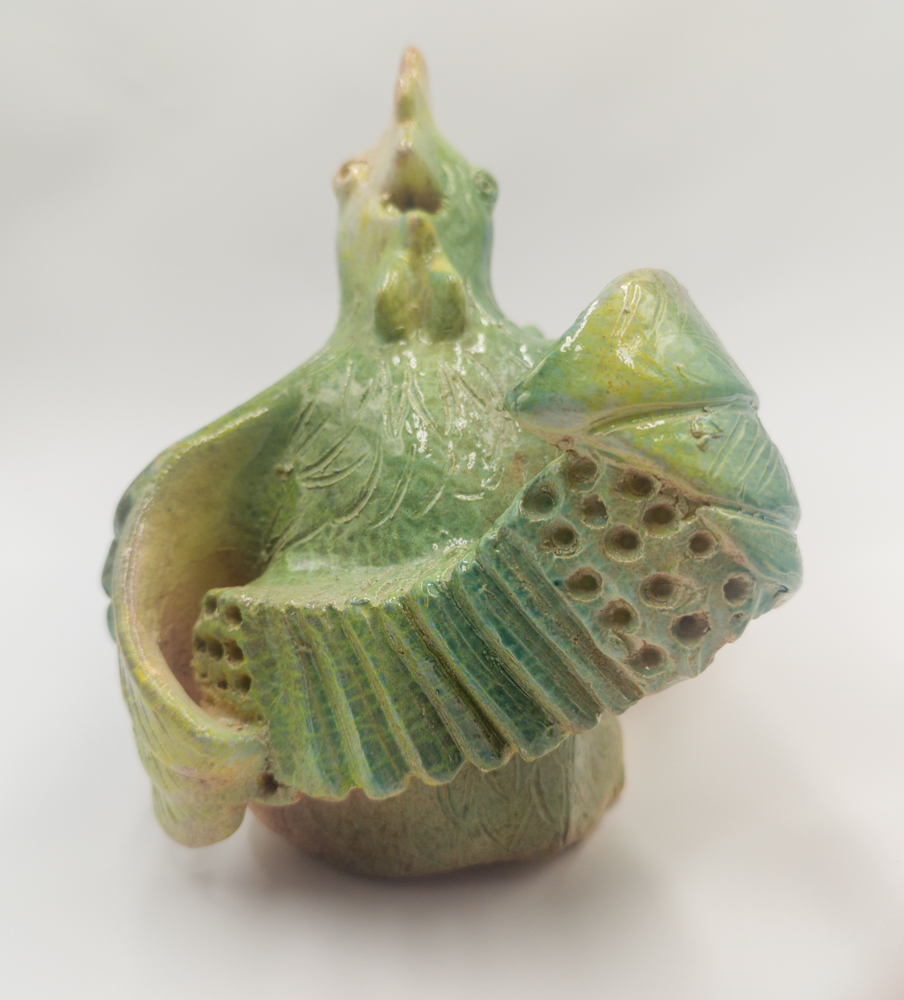
At first, Slava was unsure what the rooster should hold in its wings. He eventually chose a bayan — a type of button accordion. The instrument strengthened the folk character of the sculpture and turned the bird into an expressive musician. The open wings frame the bayan, while the broad tail balances the composition from behind.
Visitors were allowed to touch the exhibits during the exhibition. The hen and chicks were damaged, while the rooster remained the only surviving work from Slava’s original series. It therefore preserves not only the central image, but also the memory of the larger composition to which it once belonged.
Translated excerpt from the Ukrainian song that inspired the exhibition
“Two little roosters, two little roosters
Threshed the peas,
Two little hens, two little hens
Carried them to the mill.”
A personal connection
Why a bayan?
Slava and his older brother Gleb both attend music school. Slava plays the accordion, while Gleb plays the bayan. Slava chose the bayan for the rooster because he felt that its sound and character were more closely associated with folk music and better suited the exhibition theme.
Volume, wings and silhouette
Views
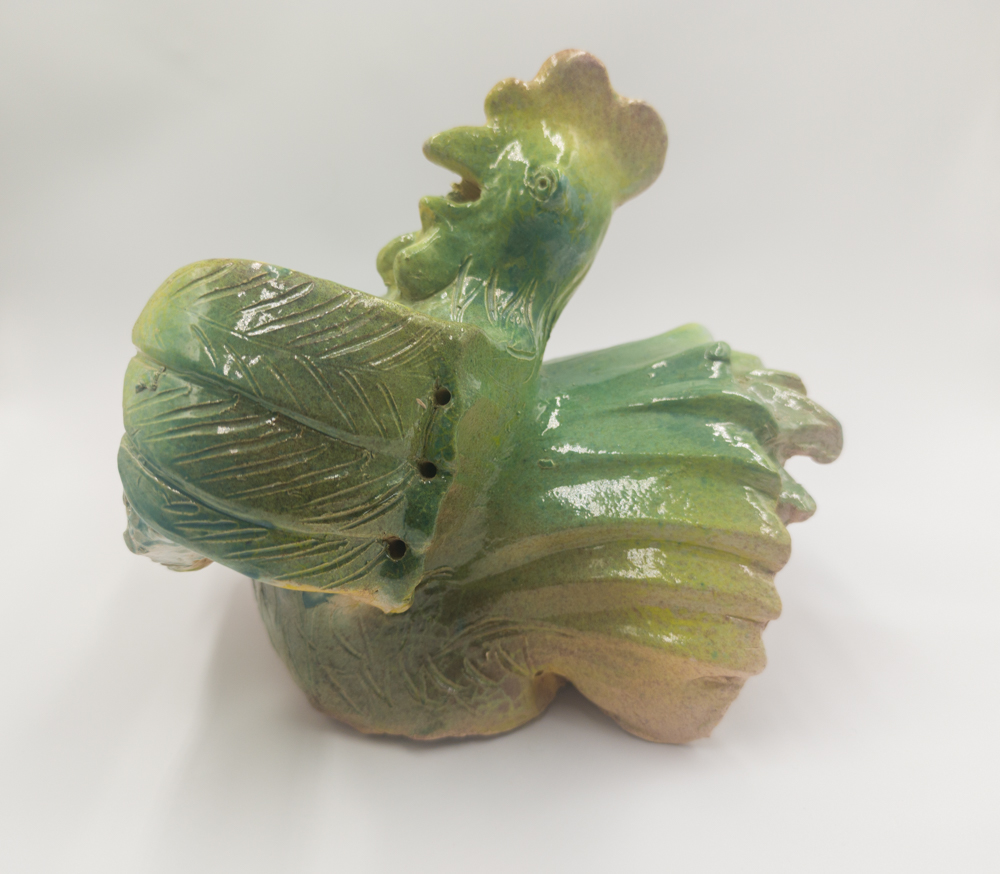
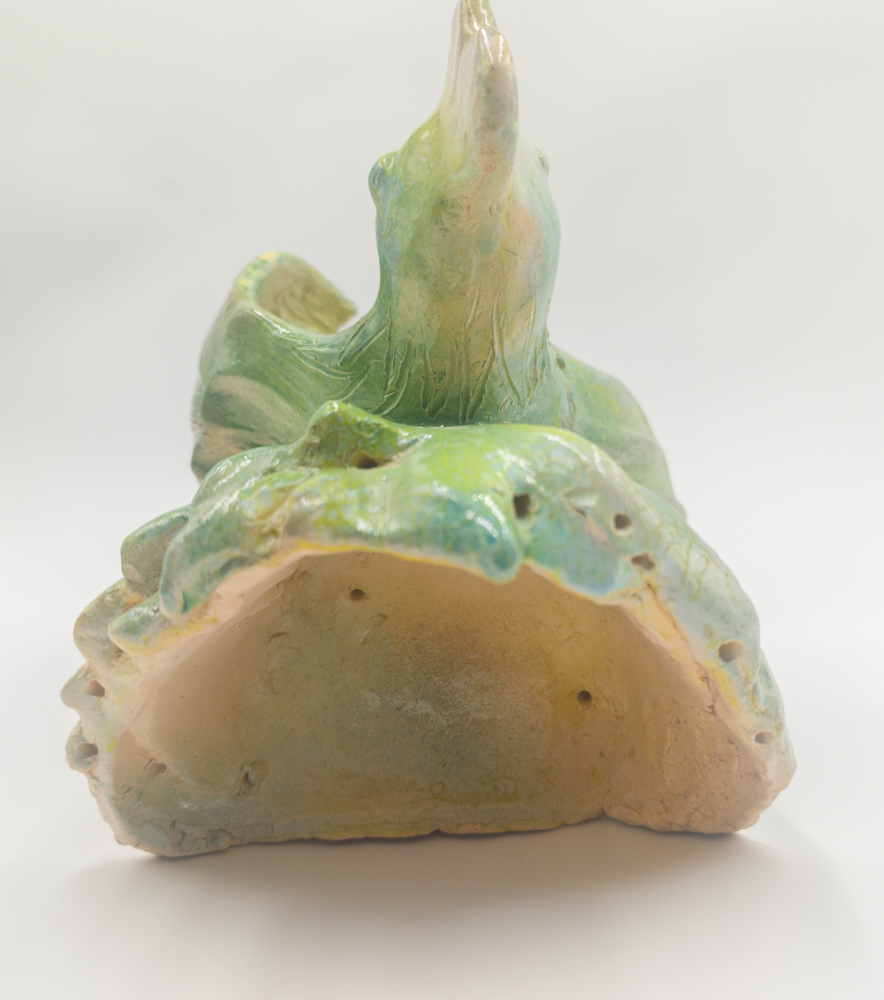
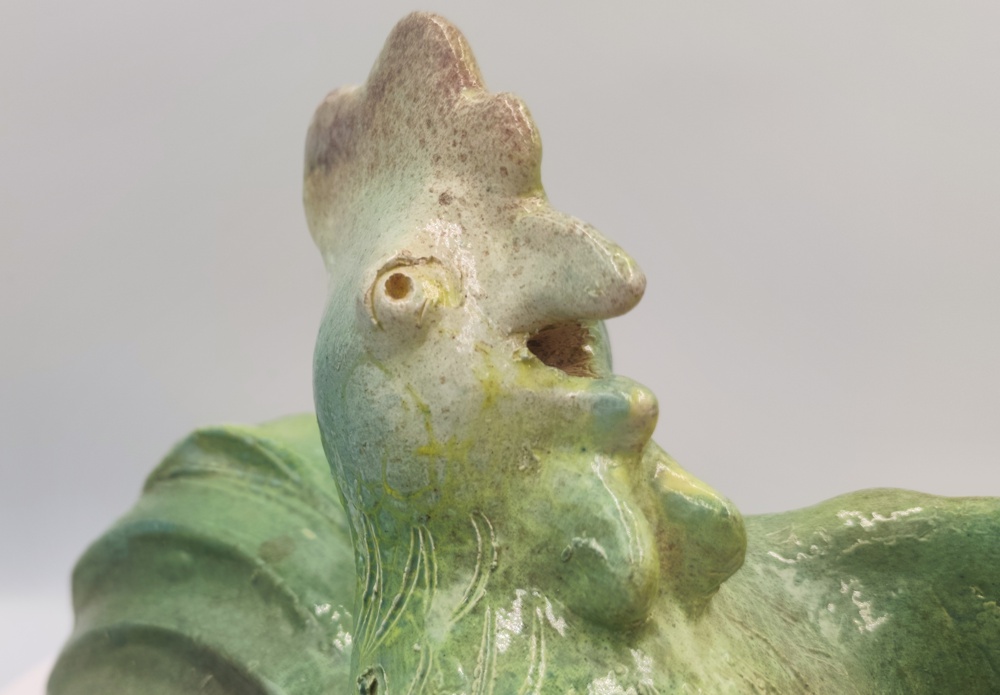
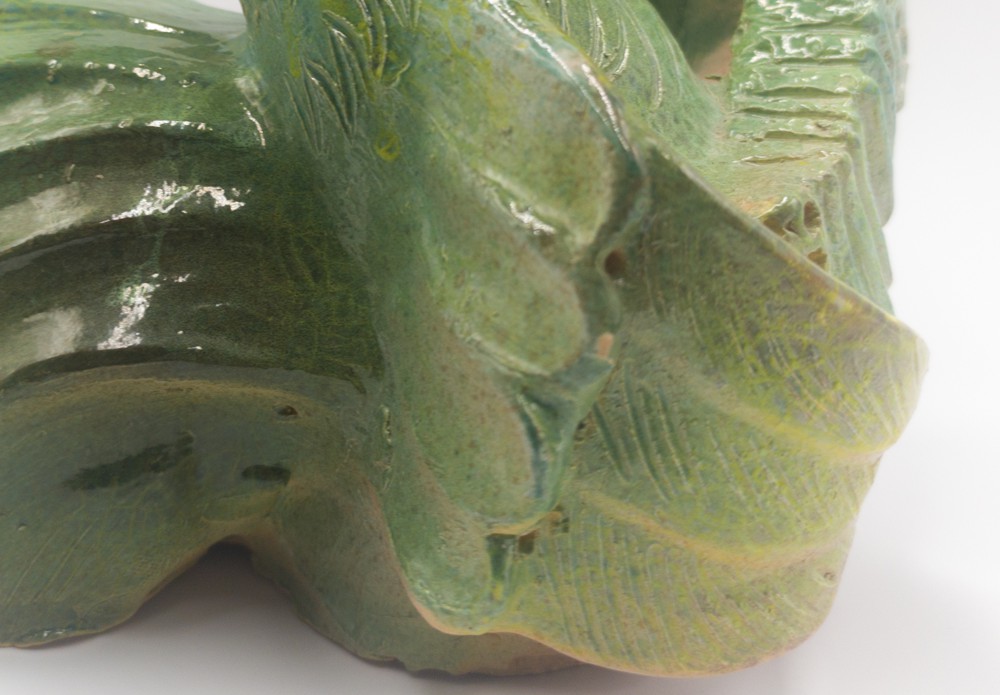
Photographs from different angles show how the raised head, open wings, broad tail and bayan form a single sculptural silhouette. Each view reveals more clearly how the instrument sits within the composition and how the figure is supported by its rounded base.
Feathers, head and instrument
Details
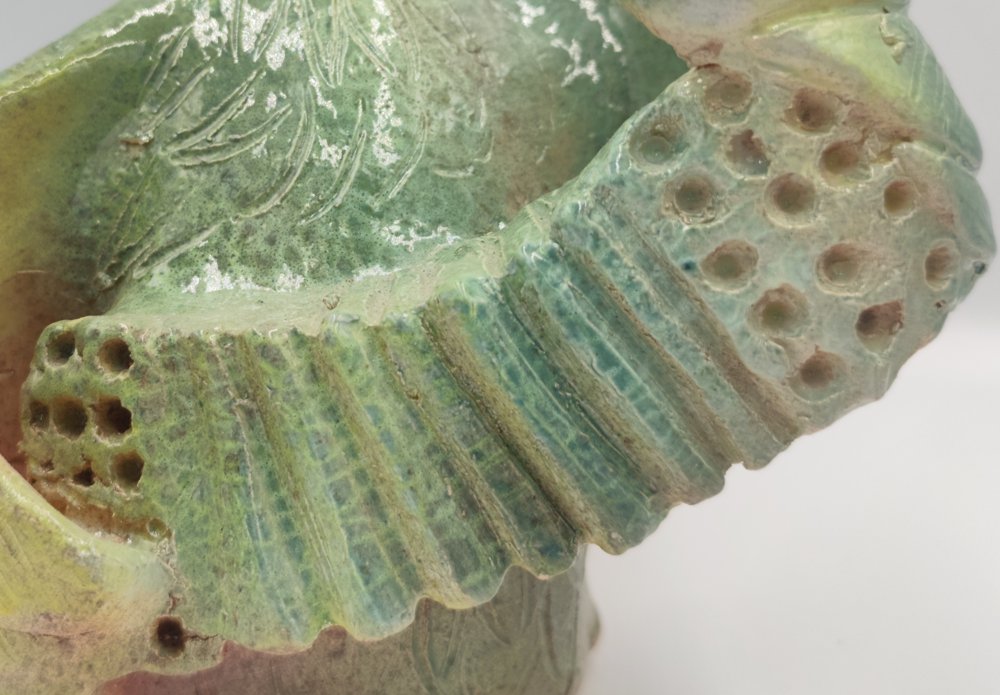
Close-up photographs reveal the hand-worked surface: incised lines on the neck and wings, layered feather textures, the shape of the comb, and the bellows, buttons and other details of the bayan. After glazing, these features remain visible beneath the softly reflective surface.
A rotating view of the form
Video
In the video, Accordion-Playing Rooster turns slowly, allowing the raised head, open wings, full tail, bayan and glazed surface to be viewed continuously from every side.
From an exhibition idea to the second firing
Making the work
The sculpture brought together an exhibition theme, the brothers’ musical experience and a demanding structural problem in soft clay.
01
Learning and exhibition context
A series inspired by “Two Little Roosters”
Slava created the work during classes at the Kyiv Palace of Children and Youth under the guidance of Yuliia Kopylova. For the exhibition, he made a rooster, a hen and several chicks based on characters from the well-known Ukrainian song.
02
Developing the character
The instrument was not part of the first idea
While modelling the figure, Slava spent time deciding what the rooster should hold. He eventually chose a bayan, the instrument played by his older brother Gleb. Slava also felt that the bayan best matched the folk character of the exhibition theme.
03
Supporting soft clay
The wings needed temporary support
The wings and feathers were among the most difficult parts to make. While the clay was still soft, a sponge was placed beneath the wings so that they would not sag or break under their own weight. Slava also considered adding legs, but decided against them because they did not fit the overall composition.
04
Completing the ceramic sculpture
Glazing and a second firing
After the first firing, the sculpture was covered with glaze and fired again. The glaze created a soft shimmer and transitions of green, yellow and grey, while preserving the relief lines and visible traces of hand modelling.