Journal · Sculpture and Portraiture
How Sculptors Build a Portrait Bust
A portrait bust isn’t just about the eyes, the nose, or the line of the lips. Everything starts with how the head sits, what its large volumes and profile look like — and how the whole thing reads as you walk around the work.
Before the Features Appear
A Portrait Isn’t a Sum of Separate Features
Looking at a portrait bust, the eye goes straight to the face — we notice the nose, the eyes, the mouth, the hairstyle, everything we rely on to recognize a person. For a sculptor, though, these details don’t exist apart from the head as a whole.
The first task is understanding how the head sits on the neck, which way it turns, how far the face projects forward, where the back of the skull sits, and how the shoulders hold the composition’s vertical line. Even a slight tilt can make a portrait read as more attentive, calmer, or more tense.
If the large proportions aren’t right, no amount of careful work on the eyes, lips, or hair will save the portrait. Details only do their job when a coherent overall form stands behind them.
The Core Idea
Likeness Isn’t Built from Details Alone
Two people can share a similar nose or eye shape, and still have a different skull structure, profile line, head position, and a different relationship between the large areas of the face.
The Met’s Open Access Collection
Three Different Ways to See a Person
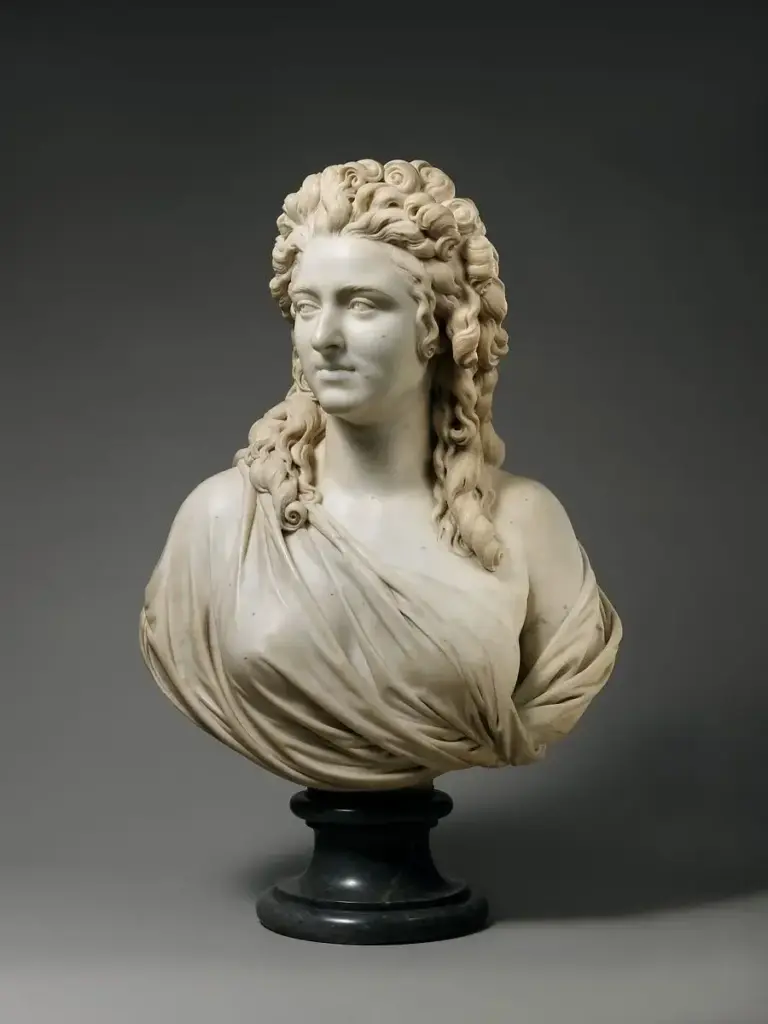
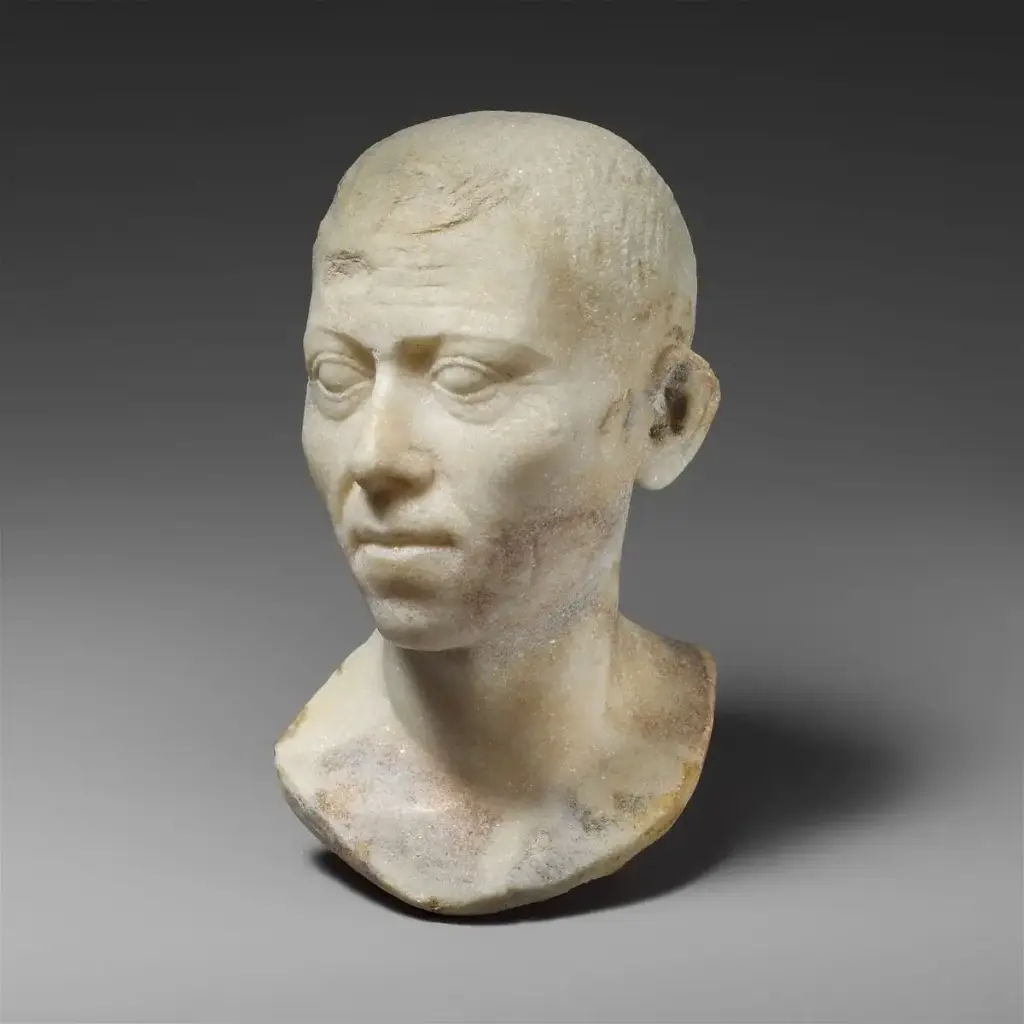
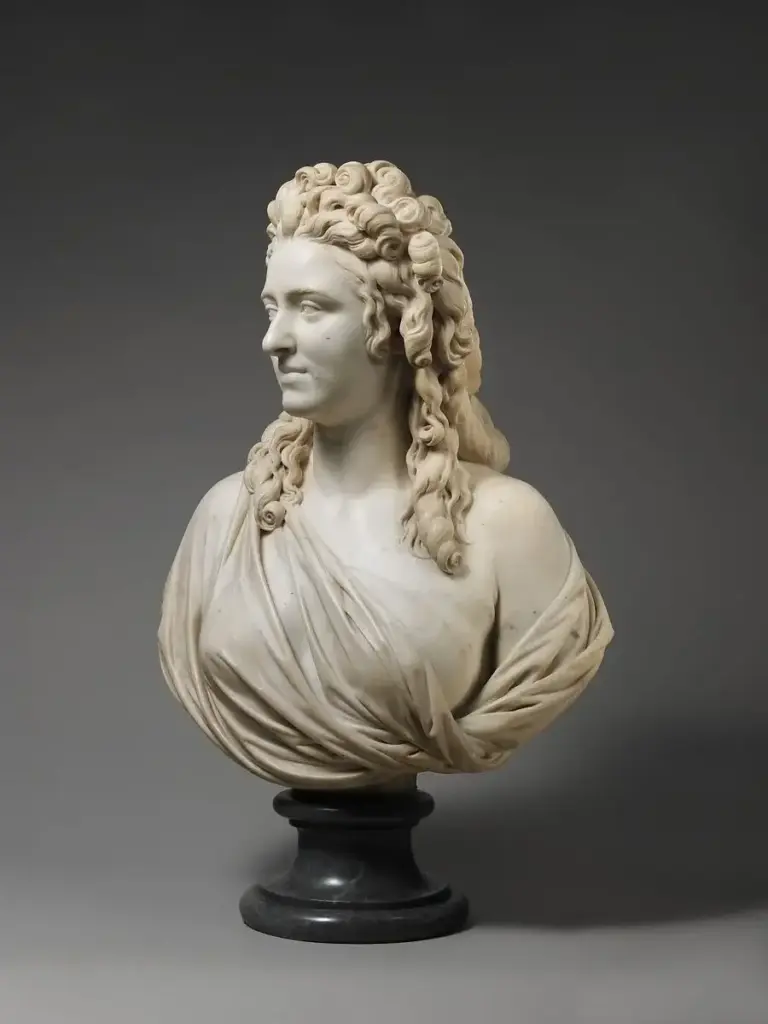
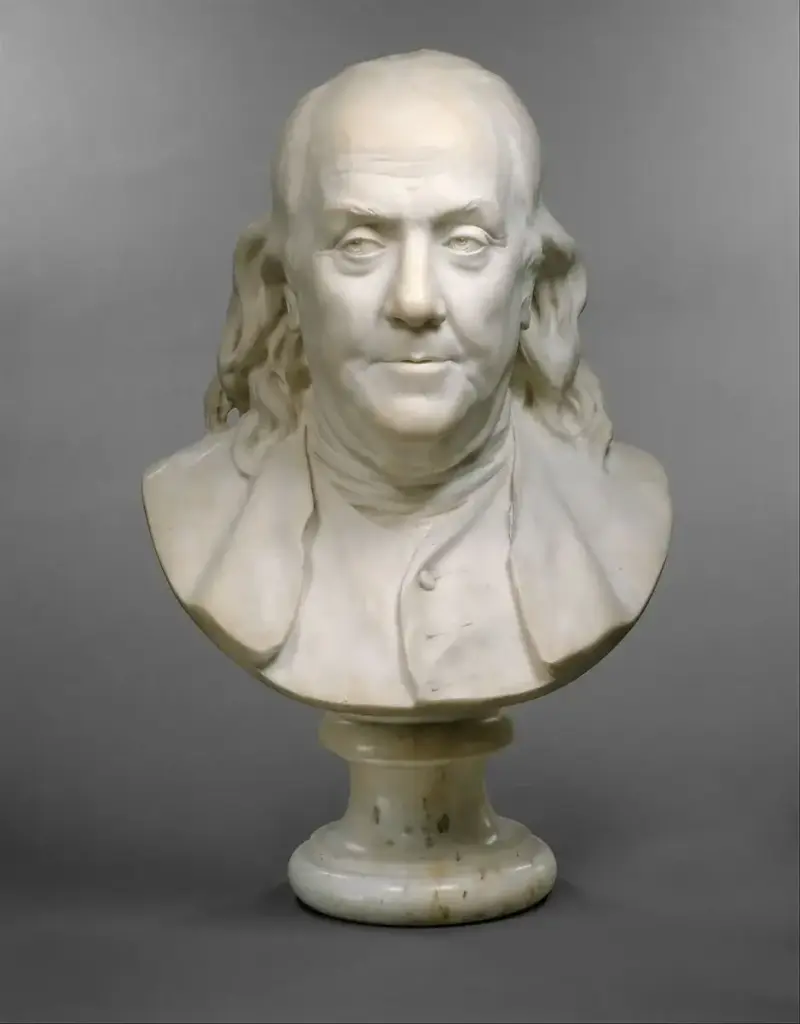
These three works come from different eras and serve different purposes. Together they show how a sitter’s age, hairstyle, clothing, posture, and the way a bust is finished at the base all shape the portrait’s overall impression.
Building the Portrait
How an Overall Volume Becomes a Face
The sequence isn’t rigid, but the sculptor constantly moves back and forth between detail and whole, checking that a local adjustment hasn’t thrown off the overall structure.
01
Direction
The Turn and Axis of the Head
The first step is establishing how the head sits relative to the neck and shoulders: straight, tilted, turned, or leaning slightly forward. This direction reads before the viewer even takes in the individual features.
02
Mass
The Head’s Large Volumes
The head isn’t a ball with a nose, ears, and hair added on afterward. From the start, the sculptor relates the cranial and facial masses to each other — forehead, cheekbones, jaw, the back of the skull, the neck. These large masses are what hold the form together from every side.
03
Depth
Proportion and Profile
The distances between features matter, but the face is also built in depth: the nose projects forward, the eye sockets recede, the chin and jaw shape the lower portion. That’s why the frontal view is constantly checked against the profile and the three-quarter angle.
04
Refinement
Features, Hair, and Surface
Once the underlying form holds together, the sculptor can work more precisely on the eyelids, lips, ears, hair, wrinkles, or drapery folds. These details don’t replace the construction — they reinforce the portrait’s character and the material’s expressiveness.
Sculpture in Space
Why One Viewing Angle Isn’t Enough
A drawing works from a single chosen image. A bust, though, exists in real space: a cheekbone that reads convincingly from the front can turn out too flat from the side, and a head’s turn needs checking from the opposite angle too before it feels natural.
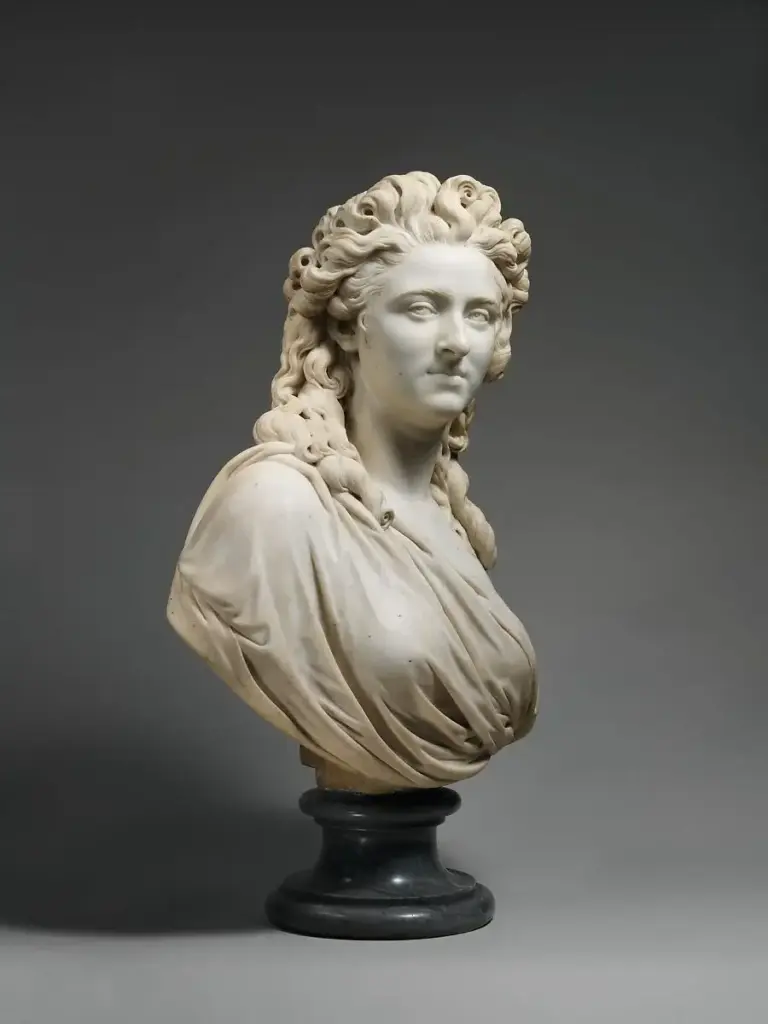
Three photographs don’t reduce the sculpture to a flat image, but they do let you see how its parts relate to one another. Change one area, and the sculptor is effectively changing several viewing angles at once.
That’s why, while working, the form gets turned constantly, viewed from a distance, from eye level, and slightly from above. This isn’t a sign of uncertainty — it’s simply how volume gets seen as a whole.
Worth a Closer Look
The Profile Shows What the Front Doesn’t
It’s from the side that you can really see the depth of the eye sockets, the projection of the nose, the placement of the lips and chin, the shape of the back of the head, and the angle where the head meets the neck.
More Than a Physical Likeness
Where Character Enters a Portrait
Character doesn’t have to come through sharp expression. A calm face can stay expressive through the tilt of the head, the direction of the gaze, the line of the mouth, or how the neck carries the head.
In the Roman bust, the marks of age — creases on the forehead, folds beside the nose, the shape of the areas beneath the eyes — let the viewer see not a generic type but a specific individual.
The portrait of Madame de Wailly is built differently. The turn of the head, the direct gaze, the elaborate volume of the hair, and the sweeping movement of the drapery combine dignity with a sense of living presence. Here, the hairstyle and clothing don’t distract from the face — they support the overall composition.
In the bust of Benjamin Franklin, Houdon rejected both the formal wig and classical dress. Natural hair, contemporary clothing, creases on the forehead, heavy eyelids, and a restrained line of the mouth build an image without unnecessary theatricality.
More Than the Face
Shoulders, Clothing, and the Base Speak Too
Shoulder width, the direction of the folds, the pedestal, and how the lower edge is finished all affect whether a portrait reads as intimate, formal, dynamic, or composed.
Slava’s Classroom Experience
A Bust of Taras Shevchenko as a Study in Portrait Form
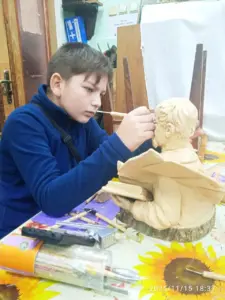
Among the pieces in Slava’s portfolio is a classroom study of Taras Shevchenko, modeled in sculptural clay in late 2025 and early 2026. The piece was made at Kyiv Children’s Art School No. 7 under the guidance of teacher Hanna Mykolaivna Sokolova.
The assignment wasn’t just about recognizable details like the mustache, hair, or clothing — it also involved the shape of the head, the profile, and the relationship between the facial features. The teacher’s guidance helped Slava notice inaccuracies and work through corrections to the form step by step.
This example isn’t meant to place a classroom study on the same level as museum works. What it shows is something else: the same questions — the coherence of the head, the profile, the viewing angles, the portrait likeness — already come up in a student’s first serious sculpting assignments.
View Slava Romanenko’s creative profile
Sources and Images
Museum Object Pages
Marble Bust of a Man, Rome, 14–68 AD — The Metropolitan Museum of Art.
Augustin Pajou, Madame de Wailly (Adélaïde-Flore Belleville), 1789 — The Metropolitan Museum of Art.
Jean-Antoine Houdon, Benjamin Franklin, 1778 — The Metropolitan Museum of Art.
Public Domain. The Metropolitan Museum of Art. Photograph of Slava provided by Slava Fine Art.