Journal · Ceramics
Shaping Animals in Clay
In ceramics, an animal rarely repeats its living model point for point. A maker picks out a few recognisable features — silhouette, proportion, the turn of a head — and builds a three-dimensional figure around them.
Looking, then simplifying
Choosing what matters most
A ceramic frog, bird, or crocodile is usually recognisable at a glance. That recognition rarely depends on accurate anatomy. A rounded body, a wide-open mouth, a distinctive beak, or a long flat tail is often enough on its own.
Clay sets its own limits. A thin leg may not hold its own weight, a fine detail can vanish after firing, and too complicated a pose can throw the whole piece off balance. How a piece finally looks depends as much on the clay as on the animal it depicts.
The maker isn’t copying nature so much as deciding what to keep, what to leave out, and how the remaining features fit together.
The main point
A few well-chosen details are enough
A piece works when silhouette, proportion, and gesture agree with each other. Even a very simplified figure can feel alive.
The Met’s open collection
Three ways to build an animal in clay
In these three ceramic pieces, the animal is bound up with the shape of a vessel, its construction, a sound, or a textured surface. Each maker solved that differently.
A closer look
Volume, vessel, and sound
In each of these three pieces, recognition comes from a different decision: a single rounded volume, the structure of the vessel itself, or a combination of sculpture and sound.
01
Frog
One rounded volume
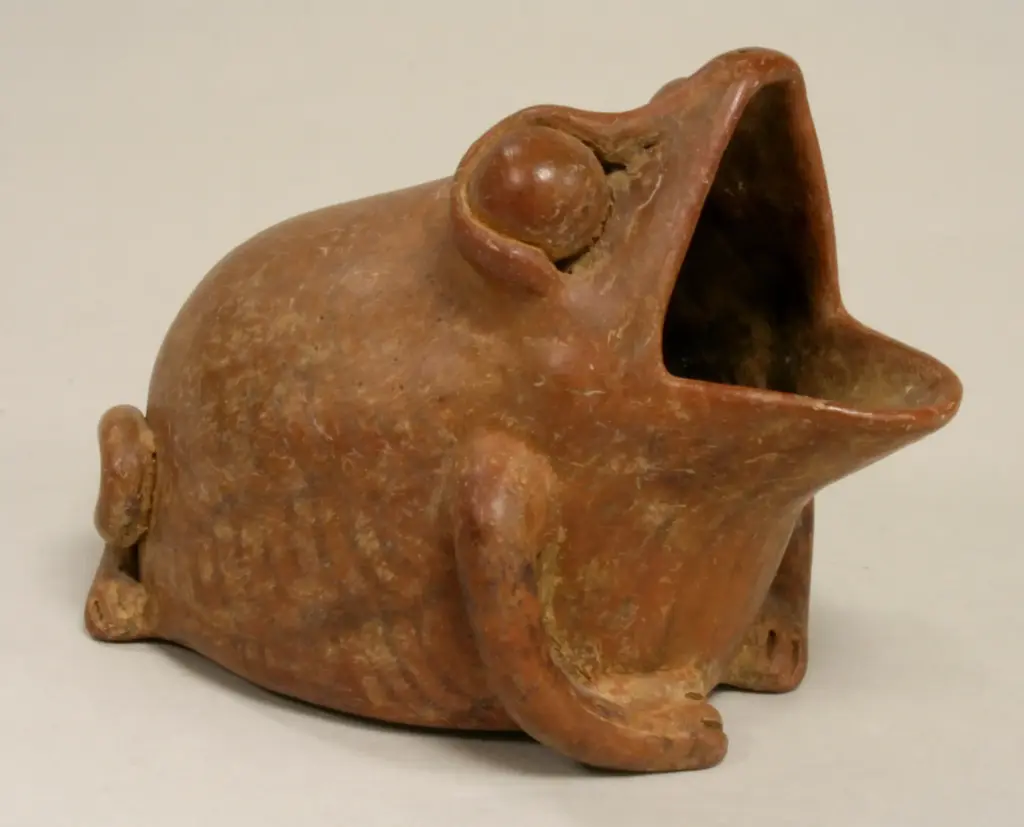
In the Colima vessel, almost the entire figure is built around a large rounded body. The short legs are pressed against it, and the wide-open mouth becomes the most striking part of the silhouette. There’s no need for a complicated pose — it reads instantly.
02
Bird
The vessel becomes the body
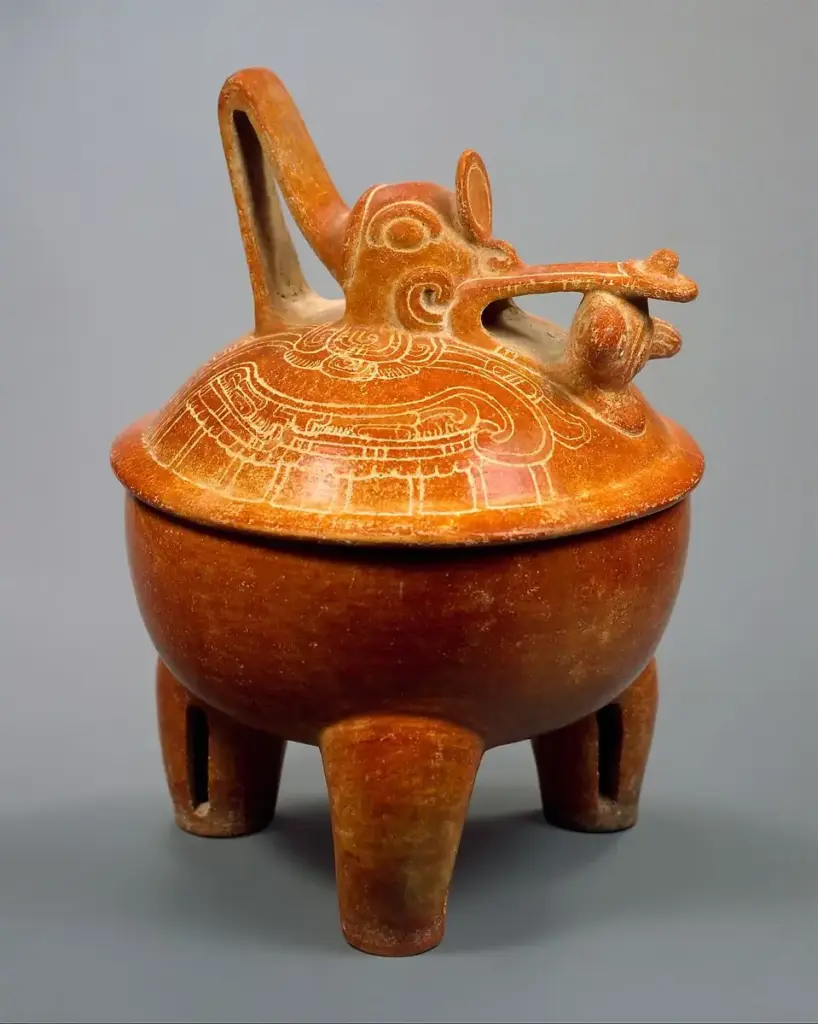
In the Maya bowl, the lower part of the vessel forms the bird’s body, and the lid becomes its back and wings. The head serves as a handle, and the bird holds a fish in its beak. Here the bird shapes the entire structure of the piece, down to the three legs and the lid.
03
Crocodile
A figure that also makes sound
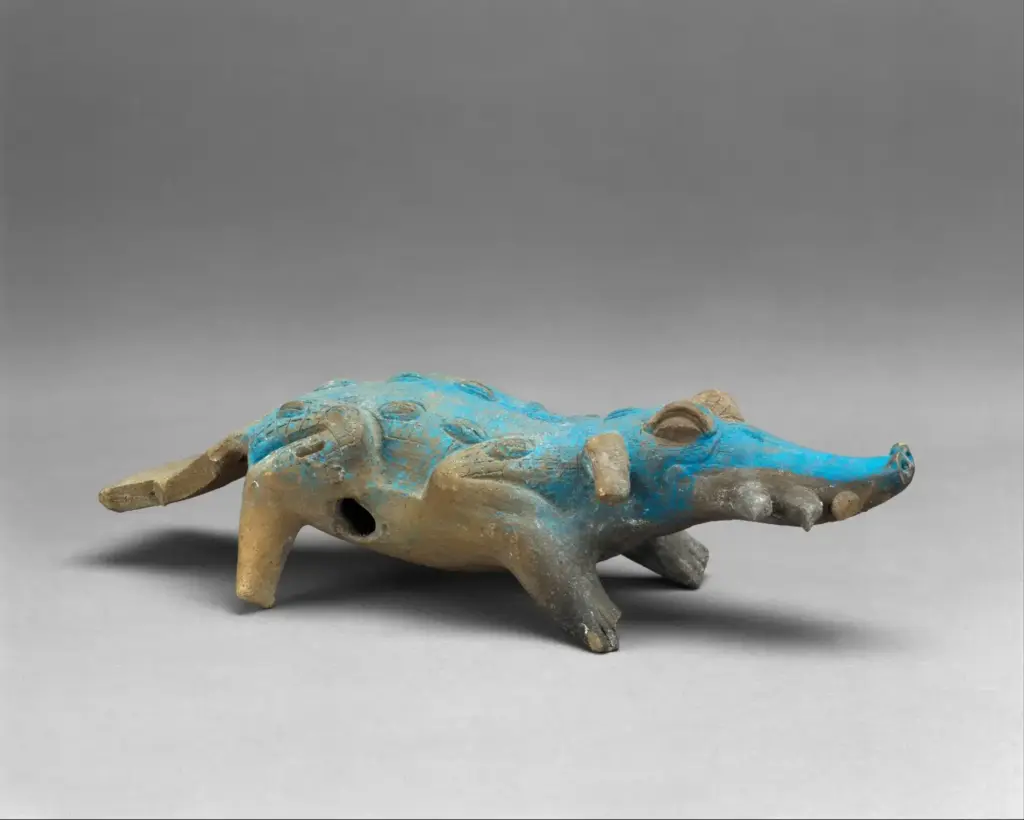
The Maya ceramic crocodile works as both a whistle and a rattle. Clay pellets sit inside the front section, and openings in the body allow it to make a sound. The elongated snout, teeth, flattened tail, and incised lines suggest scales.
Small details, read at a glance
Where a ceramic animal gets its personality
The position and turn of the head change a figure’s whole impression. A raised head can look alert or proud, a lowered one calm, and an extended snout suggests movement. Even a completely still object can seem to be watching, listening, or about to make a sound.
Proportion matters just as much. A large head and short legs make an animal simpler and more immediate. A long body, low stance, and wide tail add weight. A raised beak or spread wings do the opposite, adding lightness.
A smooth, rounded surface can suggest soft flesh, while incised lines read as scales or feathers. Traces of hand-shaping keep the marks of the process visible. Texture here isn’t decoration — it helps tell you what you’re looking at.
One more detail
What a piece is for can shape how it looks
The opening of a vessel becomes a mouth, a lid becomes a bird’s back, and a hollow interior gives a figure a voice. In a well-made piece, practical structure and animal likeness don’t get in each other’s way.
In Slava’s Studio Archive
Animals in Slava’s Studio Archive
Slava’s Studio Archive includes ceramic animals and characters where recognisable features are only part of the story — balance, pose, texture, and construction matter just as much. The Met pieces shown here aren’t sources for that work; they’re another way of looking at how an animal takes shape in clay.
Sometimes everything rests on one large volume. Sometimes the animal’s body follows the shape of a vessel. And sometimes a sculpture becomes a vessel, a lidded container, a whistle, or a rattle.
Visit Slava’s Studio Archive
Sources and images
Museum records
Details about these pieces, and the images used here, come from the open digital collection of The Metropolitan Museum of Art:
Frog Vessel
Tripod Bird Bowl
Crocodile Whistle and Rattle
The images used here are marked Public Domain on the Met’s website. The Met makes public-domain images from its collection available through its Open Access programme (CC0).